The Data Center Plushie That Screams Back
AI infrastructure is usually sold as clean, silent, and somewhere else. Bezzy, a limited-run server-rack plushie that plays the sound of a real data center when squeezed, makes the cloud feel less like an icon and more like a neighbor problem.
Quick Take
- Fact: New York creative studio Basura and Big Data, the music project from producer Alan Wilkis, launched Adopt a Data Center, a satirical campaign built around a plush toy named Bezzy. WIRED covered the drop on September 18, 2026.
- Why it matters: Most AI coverage happens at the demo layer: model scores, agent tricks, token prices, benchmarks, memory, coding, video, voice. Bezzy drags the story down to the facility layer: land, power, noise, permitting, grids, neighbors, and who gets a say.
That matters because the AI boom is not only software. It is a buildout. Every faster model, cheaper inference
- Who cares: AI builders and infra teams should separate model quality from facility legitimacy. A stronger model does not answer questions about siting, noise mitigation, grid impact, or local benefit.
- Judgment: **Fairly hyped as a sharp culture stunt that makes data-center noise and siting disputes tangible; overhyped if you treat a 20-unit plush drop as policy evidence or repeat Wilkis’s market-share claim as a verified Bandwa
What happened
New York creative studio Basura and Big Data, the music project from producer Alan Wilkis, launched Adopt a Data Center, a satirical campaign built around a plush toy named Bezzy. WIRED covered the drop on September 18, 2026.
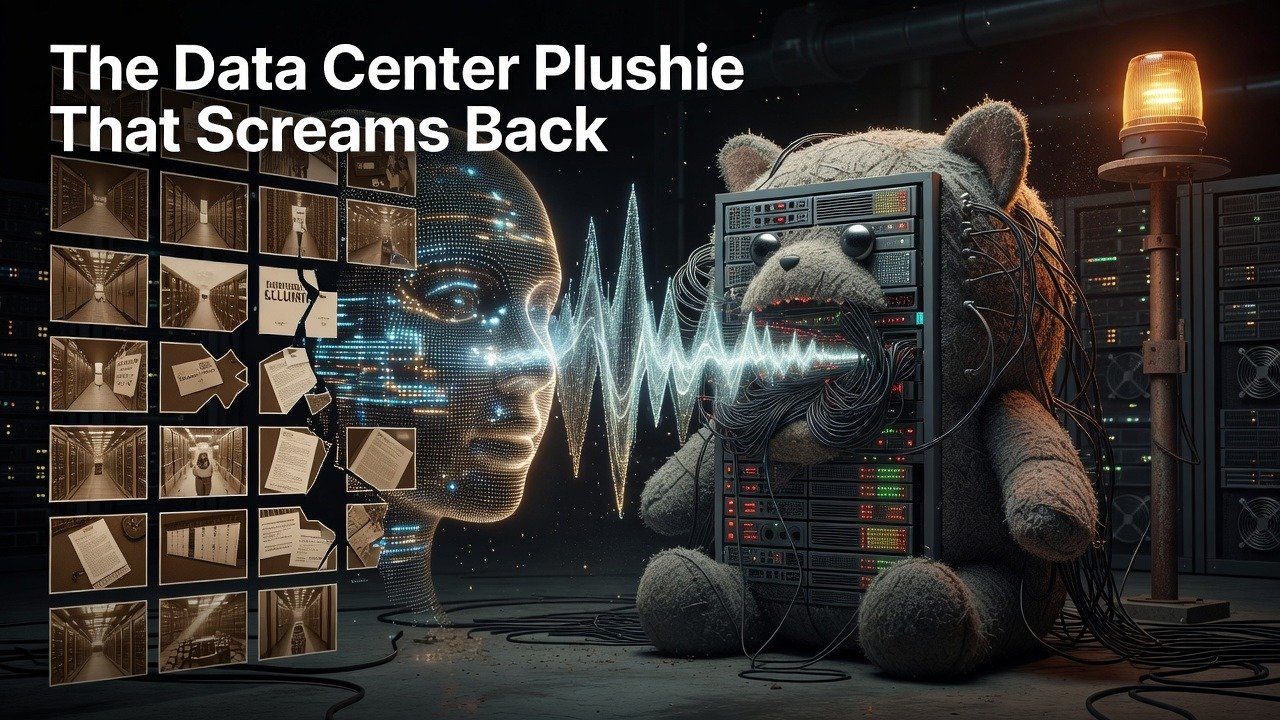
Bezzy is shaped like a small server rack with arms, legs, and googly eyes. Squeeze its torso and it plays a few seconds of audio recorded by a neighbor of a Virginia data center. WIRED describes the sound as piercing and grinding. The toy tag says, “Hug me for ear-piercing forever hum.”
The drop is intentionally tiny: WIRED reports 20 handmade US dolls at $99, sold through the Adopt a Data Center site and the Big Data storefront. The campaign also includes stickers with lines like “Every data center deserves a forever home” and “Open your heart. And your power grid.” The site’s own line is sharper: “Adopt a data center: All they ask for is everything.”
Basura founder Rajeev Basu told WIRED the project came from dozens of interviews with people who live near data centers in the US. The plush is the bait. Click “adopt now” and the campaign routes people to a statement with links to research and reporting on how data centers fit into daily life.
Basu’s frame is not simply “data centers bad.” His WIRED quote is more useful than that: “It’s not about whether AI data centers should exist. It’s about who gets to decide where they go, what resources they consume, and whether the communities living beside them actually benefit.”
Wilkis adds the broader politics. He told WIRED that backlash to data centers is “genuinely bipartisan,” and argued that AI has become a proxy for wealth concentration. He also claimed roughly 40 percent of US stock-market value is riding on a handful of tech companies tied to AI success. Treat that market-share figure as his claim through WIRED, not a checked Bandwagon market metric.
Why it matters
Most AI coverage happens at the demo layer: model scores, agent tricks, token prices, benchmarks, memory, coding, video, voice. Bezzy drags the story down to the facility layer: land, power, noise, permitting, grids, neighbors, and who gets a say.
That matters because the AI boom is not only software. It is a buildout. Every faster model, cheaper inference plan, and “always on” assistant points back to physical infrastructure. People who never touch an API may still hear the fans, see the transmission work, pay into the grid upgrades, or fight the zoning case.
The plushie works because it makes an abstraction physical. “The cloud” sounds weightless. A stuffed server rack that screams when hugged is silly, but it also asks a clean question: if the service is seamless for users, why is the burden so noticeable for some neighbors?
Noise is the most immediate example. WIRED notes that data centers have drawn complaints about noise pollution, along with criticism over energy use and expansion of gas power. Bezzy does not prove every facility is harmful. It does show why local complaints can beat polished corporate language. A neighbor’s recording can travel farther than a sustainability deck.
The siting fight also changes the risk map for builders. AI companies and vendors can talk about GPUs, chips, and model releases all day. Local governments talk about substations, load growth, tax deals, jobs, water, property values, backup generation, and sleep. If capacity planning ignores community consent, it is not really capacity planning.
There is a communications lesson too. Soft AI branding has leaned hard on assistants, copilots, magic buttons, and frictionless productivity. Bezzy is the counter-brand: a cute object with an uncute sound. It is not trying to explain transformer architecture. It is trying to make the industrial bargain feel discussable.
Who should care
AI builders and infra teams should separate model quality from facility legitimacy. A stronger model does not answer questions about siting, noise mitigation, grid impact, or local benefit.
Policy and community affairs teams should assume residents will bring their own evidence. Complaint logs, field recordings, permit records, and utility filings are now part of the AI story, whether the launch deck mentions them or not.
Investors should not trade on a plush toy. But they should notice the signal. If AI valuations depend on massive buildout, then permitting friction, ratepayer fights, local opposition, and energy politics are not side quests.
Product and marketing teams should test their language against the physical layer. “Seamless intelligence” sounds different when someone nearby hears the equipment at 2 a.m.
Local residents should use the campaign as a pointer, not as proof. Ask for permits, load studies, mitigation plans, benefit agreements, complaint histories, and third-party measurements. Satire can open the door. Records should do the work.
Bottom line
Bezzy is a joke with a receipt: a handmade plush server rack that plays a Virginia neighbor’s data-center recording when squeezed. The drop is small, but the issue behind it is not.
The right read is not “ban AI because the doll screams.” It is also not “ignore residents because the doll is a stunt.” The useful middle is stricter: if AI infrastructure is becoming critical infrastructure, then the siting process, resource burden, and community upside need the same attention as model launches.
The cloud has a soundtrack. Some people are hearing it first.
Bandwagon Check
**Fairly hyped as a sharp culture stunt that makes data-center noise and siting disputes tangible; overhyped if you treat a 20-unit plush drop as policy evidence or repeat Wilkis’s market-share claim as a verified Bandwa
Sources
- Adopt This Data Center Plushie and Hear Its Piercing Scream
- Adopt This Data Center Plushie and Hear Its Piercing Scream (WIRED)
By Sean Smith · AI Bandwagon