Nvidia Buys the Hub: What a $13B Hugging Face Deal Means for Open Culture
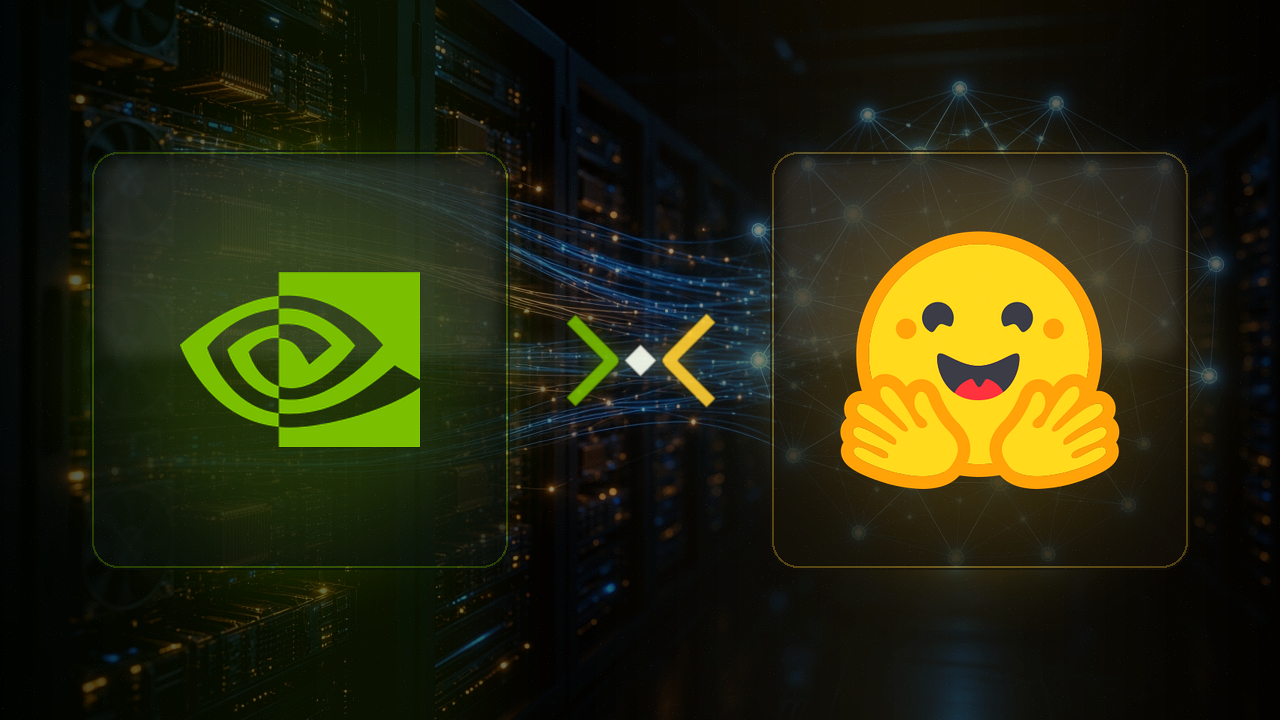
The town square just got a landlord with a CUDA accent. NVIDIA agreed to acquire Hugging Face for about $12.93 billion, folding the default home of open models into the company that already sells most of the GPUs those models train on.
The press kit says the platform stays open. The SEC filing says "subject to regulatory approvals" and lists China-origin open weights as a material risk. Both can be true. Neither is a guarantee.
What Actually Happened
NVIDIA's September 2026 definitive agreement breaks down to roughly $11.9 billion payable to Hugging Face stockholders, plus an equity retention program of up to $1.0 billion for employees joining NVIDIA. The deal is expected to close in the first half of 2027, pending regulatory approval.
Jensen Huang's blog post delivers the soft sell numbers: more than 18 million developers, researchers, and creators; more than 3 million models, 500,000 datasets, and 1 million applications; more than 200,000 companies on the platform. NVIDIA already claims to be the largest open-model contributor there with 500-plus models and 250-plus datasets.
The promise line is carefully lawyered. Developers keep choosing models, frameworks, clouds, inference providers, and compute. "NVIDIA compute will not be required," the announcement states.
The Commitments and the Fine Print
The SEC filing echoes a commitment to keep the platform open "consistent with Hugging Face's existing practices." This includes uploads and downloads of models and datasets of users' choosing, plus support for other silicon vendors.
But contractual "open" is not a constitutional right. CUDA gravity does not need a mandate to work its magic.
If NVIDIA-hosted evaluations, NIM endpoints, and "recommended" stacks become the path of least resistance, multi-accelerator support can remain technically true while becoming economically optional. The infrastructure tilts without anyone breaking explicit promises.
Who Owns the Culture
Ownership of the repository is not the same as ownership of the culture. That changes when roadmap decisions, ranking algorithms, abuse tooling, and default inference paths start to tilt in predictable directions.
Hugging Face's last public valuation was $4.5 billion after a 2023 round that included NVIDIA. The Verge notes the startup reportedly rejected a prior NVIDIA investment that would have valued it around $7 billion, wary of a single dominant backer.
The Information's roughly $150 million annualized revenue figure makes this multiple look less like a SaaS deal and more like infrastructure insurance. NVIDIA wants to control the distribution surface while closed labs like OpenAI, Anthropic, and Google flirt with custom silicon.
The China Problem
The SEC filing's own risk factor is blunt about the regulatory landscape. Governments may restrict open-source training, release, transfer, or use of AI models. Many popular open models originate in China and get fine-tuned worldwide. Limits on serving those weights could hit both Hugging Face and NVIDIA's broader business.
Buying the hub does not buy immunity from export controls. It buys the liability of hosting restricted content. NVIDIA now owns both the distribution problem and the compliance headache.
The Non-Cynical Upside
There is a legitimate upside to consider. The hub needs reliability, safety tooling, evaluation at scale, and inference infrastructure that doesn't melt under viral checkpoints. NVIDIA has money, operational muscle, and a stated commitment to open weights.
Clem Delangue choosing NVIDIA over a slower independent path represents a bet that scale beats independence. The platform could genuinely improve under better-funded stewardship.
Maybe the promises hold. Maybe multi-vendor support remains robust. Maybe the culture of openness survives corporate ownership intact.
What This Really Means
Treat "open platform" as a contractual posture, not a constitutional right. The real test comes after the deal closes, when operational decisions start shaping the ecosystem in subtle but persistent ways.
NVIDIA now controls both the pickaxe and the distribution channel. That's not automatically bad, but it's definitely powerful. The company that dominates training hardware now owns the primary discovery mechanism for the models that hardware creates.
The open AI community just learned what every digital commons eventually discovers: someone always ends up owning the infrastructure. The question is whether they use that ownership responsibly or inevitably.
Bandwagon Check
Fairly hyped as a natural consolidation move that could improve platform reliability and scale; overhyped if you believe contractual promises guarantee long-term openness against economic incentives. Fact: NVIDIA is acquiring the dominant open model hub for $12.93 billion with promises to maintain current practices. Company claim: The platform will remain open with support for all hardware vendors and user choice in models and frameworks. Judgment: Infrastructure ownership creates gravitational pull that doesn't require explicit policy changes to influence ecosystem behavior.
Sources
- [NVIDIA SEC 8-K Filing on Hugging Face Acquisition](https://aibandwagon.blog/nvidia-buys-the-hub-hugging-face-deal/)
- [The Verge reporting on deal valuation and prior negotiations](https://aibandwagon.blog/nvidia-buys-the-hub-hugging-face-deal/)
- [The Information revenue figures via The Verge](https://aibandwagon.blog/nvidia-buys-the-hub-hugging-face-deal/)
By Sean Smith · AI Bandwagon